- Sep 9
Writing for Educational Equity
My story is the same story many people have. Writing IEPs is not a process that is well-taught or implemented in student's educational plans. The reason why IEPs are not well implemented is because they are not written well. An IEP is descriptive document that communicates the needs of a student with disabilities. Everyone who interacts with a child's education should know and implement the IEP. It is the special education teachers job to ensure the document is clear, concise, and represents the student's needs. However, there is no program or book that can show teachers how to write a well-written IEP.
No One Showed Me How
I remember writing my first IEP over ten years ago after completing my special education licensure program. I had to complete the current level of performance and IEP goals. My first inclination was to use the report from the educational psychologist.
"She knows what the student is able to do and I don't. The educational assessment is great place to start!"
I took the report and wrote three paragraph based on the educational psychologist and wrote some grade level annual goals and submitted document to the case manager. A couple of week later, the case manager did a presentation with entire special education team.
"This is how you present levels of performance. Canissa did a great job with explaining the educational report"
Even though I got the stamp of approval on my present levels, I did not know how I was going to implement this IEP in the classroom. In other words, writing present levels from the perspective of someone outside of the classroom setting. My current levels had no teacher observations or classroom data, which could misrepresent the students needs within a classroom setting. Prescriptive current levels of performance makes it harder to implement the IEP in the classroom because some accommodations might not fit the setting.
I created my own lessons and assessments
I went back to drawing board and decided to do some classroom observations and provide students with grade level assessments. However, the school did not have any assessments besides the ones provided for general education. I needed to dig deeper with academic assessments to what they were able to do at each grade level and what skills they actually needed.
"The most important part is developing assessments that are grade-level aligned and isolate specific skills needed to access grade-level content"
I developed Happy Capy's Progress Garden, a series of resources with assessments and lessons designed to understand where students are and how to move them forward. Most of the resources I found were not aligned with want my students needed to develop.
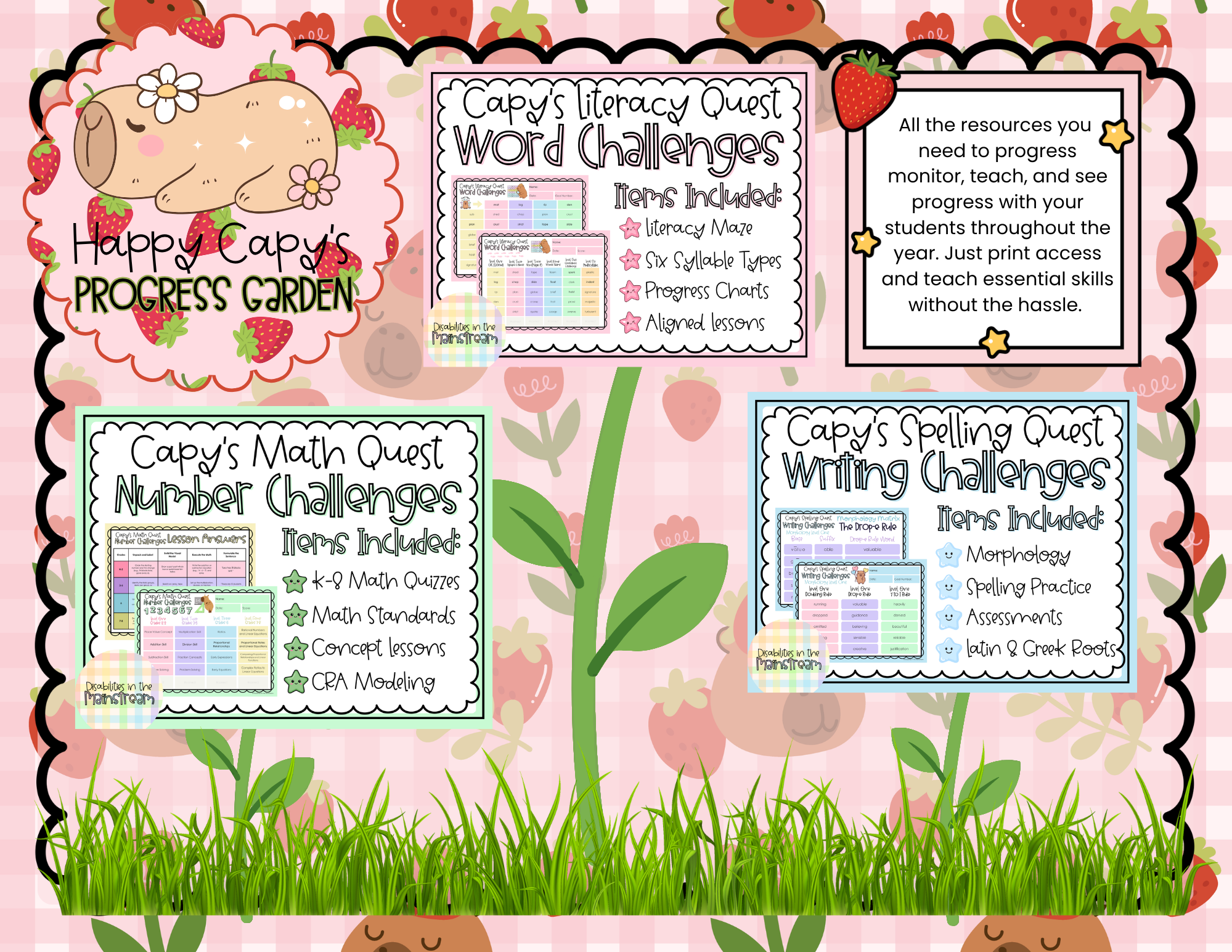
I began writing the curriculum for reading, writing, and mathematics. The Math, Literacy, and Spelling Quests where constructed by the needs of my students and how to isolate skills to provide the correct instruction to address individual skill gaps. Since I worked specifically with middle school students, I developed leveled assessments to address the needs of students who required phonological awareness, phonics, and comprehension instruction. Most of my student struggle with the decoding process. Recent books like Reading Above the Fray by Juila B. Lindsay has influenced the instructional components of the Literacy Quest to match best practices with the science of reading research. The bible for mathematics instruction titled Teaching Student-Centered Mathematics: Developmentally Appropriate Instruction for Grades 6-8 by John A. Van de Walle and Jennifer M. Bay-Williams transformed my instruction to include manipulatives and using CRA methods to teach algorithms in middle school. To design the Spelling Quest instruction, I researched current spelling rules and created a comprehensive guide to teach spelling rules. Overall, the Happy Capy Progress Garden allowed me to write present levels to target actual skills students need in order to access grade-level content in reading, writing, and mathematics.
Writing full-picture PLAAFP
Create a full-picture PLAAFP means including all of the data (standardized, classroom observations, CBMs) you need to understand where the student is academically and functionally. The most important part is being thorough with your analysis, meaning you have to complete dissect the data. MAP and iReady scores have give a general overview of topics, but not the skills necessary to master the topic. The Happy Capy Progress Garden focuses on skills needed to make mastery towards grade level standards in math, reading, and writing. The data from each Quest to generate a comprehensive roadmap to improving academic progress of students with disabilities.
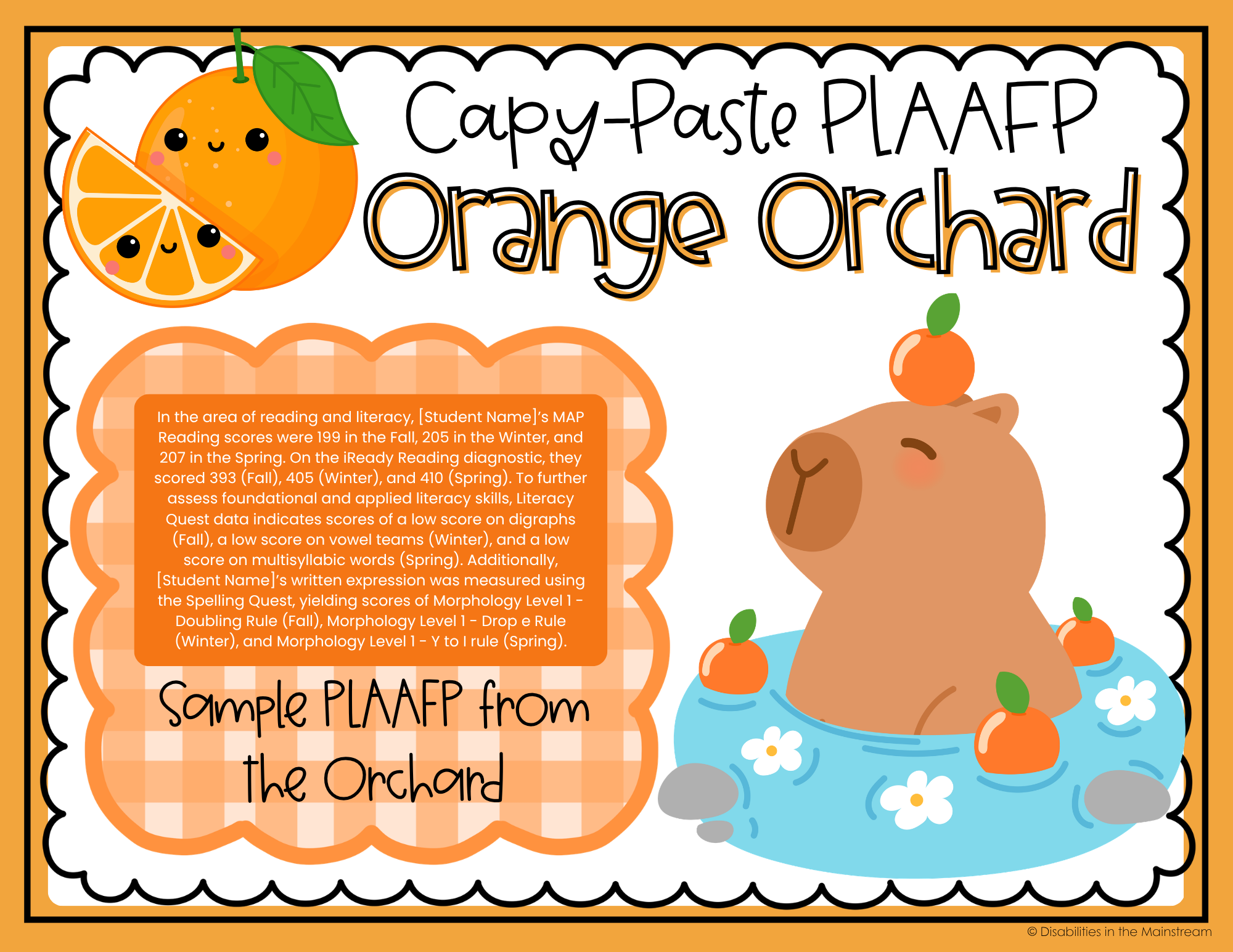
The PLAAFP is not about deficits, its about possibilities. I realized the true potential of students when I was able to see where students were going on their journey. The PLAAFP creates an instructional guide map for writing academic goals. Without a strong and comprehensive PLAAFP, no one can write instructional goals and objectives.
Goal writing was not student-centered
The IEP is not complete without the annual goals and objectives. The goals and objectives are the roadmap to instructional access for students with disabilities. When I first started writing IEP goals, I focused on the state standards.
"I should lookup the Common Core Standards for mathematics and copy the standard into the objectives and annual goal"
I was praised for standards in my goals. However, standards are not aligned with the needs of the student according to their disability. Also, if the student is not able to meet grade level standards, then the instruction will interfere with their ability to make academic progress.
Write goals and objectives with accommodations and disability-aligned methodologies within each goal. I developed Happy Capy's Goal Strawberry Patch to make student-centered IEP goals easier. I also wanted to develop goals that were manageable and allowed the students to get instruction to meet their goals.
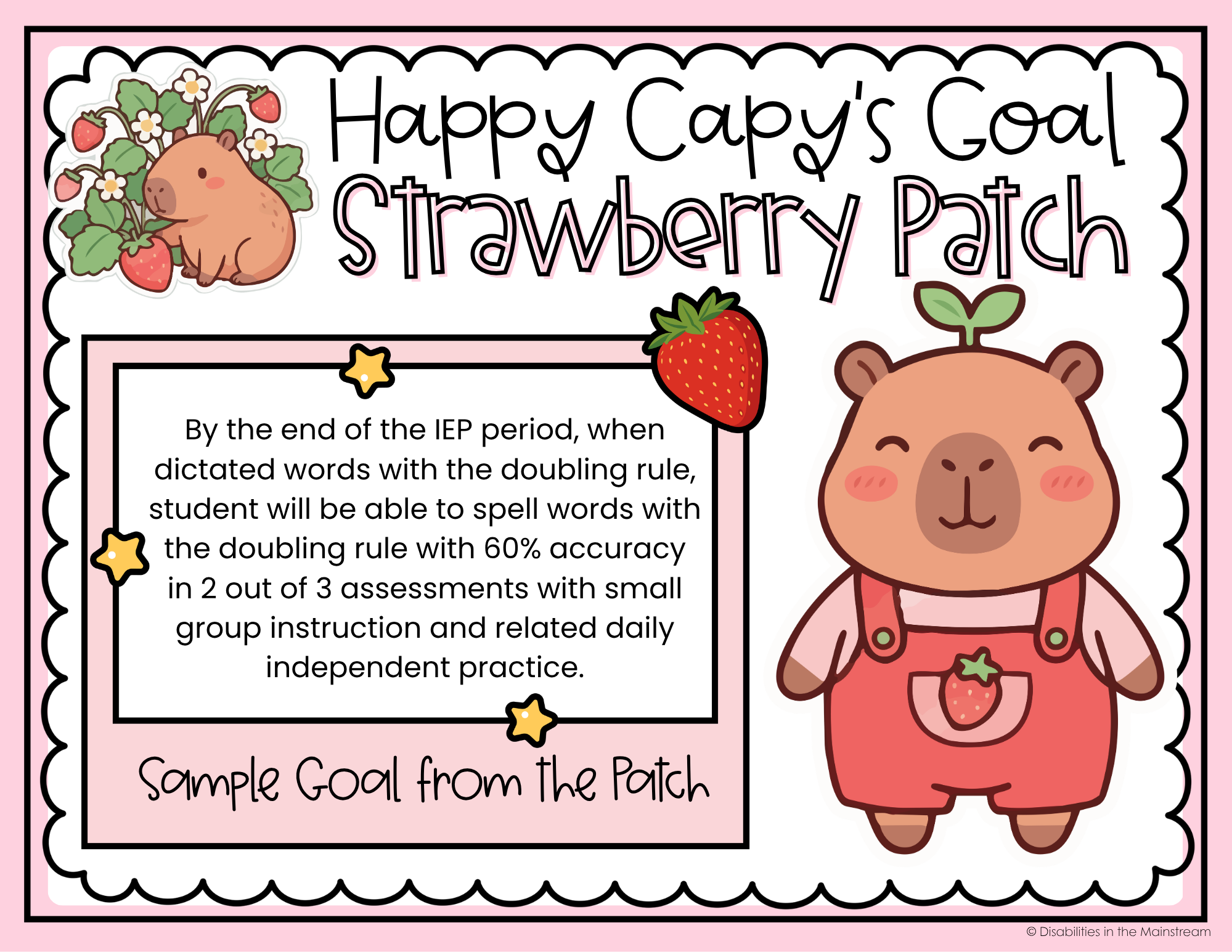
The assessments are tiered to ensure students are able to meet goal benchmarks within a year span. In addition, the goals are also written with the skill, instructional method, and assessment methodology to ensure the goal is implemented with fidelity. Anyone who tracks these goals can implement the IEP goal, which is the ultimate goal of the IEP. Happy Capy's Goal Strawberry Patch not only makes it easier to use data to create goals, but also aligns with Happy Capy's Progress Garden resources so you don't have figure out what to do next with progress monitoring and instruction.
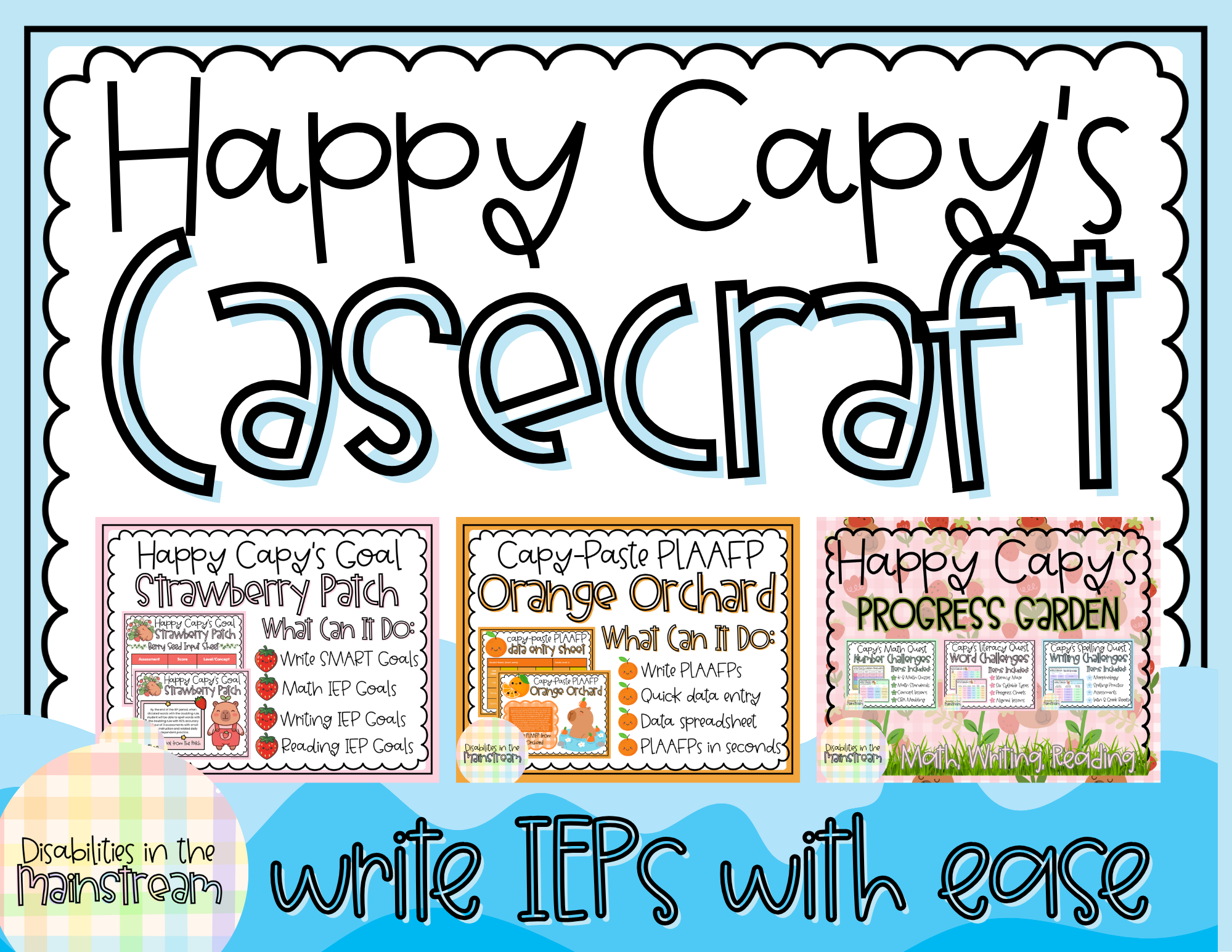
Get your copy of Happy Capy's Casecraft to get everything you need to write strong IEPs.